ISO 7 Cleanroom: requirements, air changes & typical applications
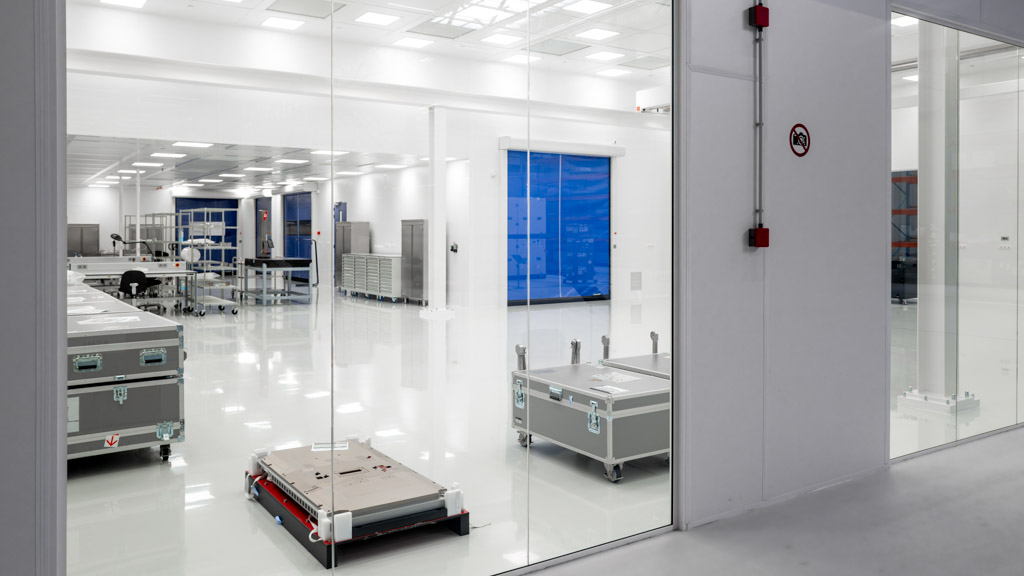
An ISO 7 cleanroom is one of the most commonly specified controlled environments for high-quality manufacturing across medical device, pharmaceutical and advanced technology sectors. Within Good Manufacturing Practice (GMP) frameworks, ISO 7 typically aligns with a Grade C environment, requiring strict control of both airborne particle concentration and operational practices to safeguard product integrity.
At ABN Cleanroom Technology, we approach ISO 7 design through our Configure-to-Order Plus (CTO+) system: a modular and validated methodology that enables each cleanroom to be configured from pre-engineered functional building blocks. This approach ensures repeatable quality, faster delivery, and enhanced maintainability across the entire cleanroom lifecycle, from design through operation and eventual modification.
What is an ISO7 cleanroom?
An ISO 7 cleanroom, as defined by ISO 14644, maintains a controlled particle concentration below specific thresholds. The classification determines the maximum allowed number of particles per cubic meter at defined particle sizes.
Unlike higher-grade zones, ISO 7 environments typically use turbulent mixed airflow, where dilution and pressure control play a greater role than velocity alone.
Effective zoning, pressure cascades and validated airflow layouts are critical in ensuring that the environment remains stable during real operational conditions. Cleanroom performance is not defined by the test report, but by its behaviour when people, equipment and materials are in motion.
Particle limits & monitoring
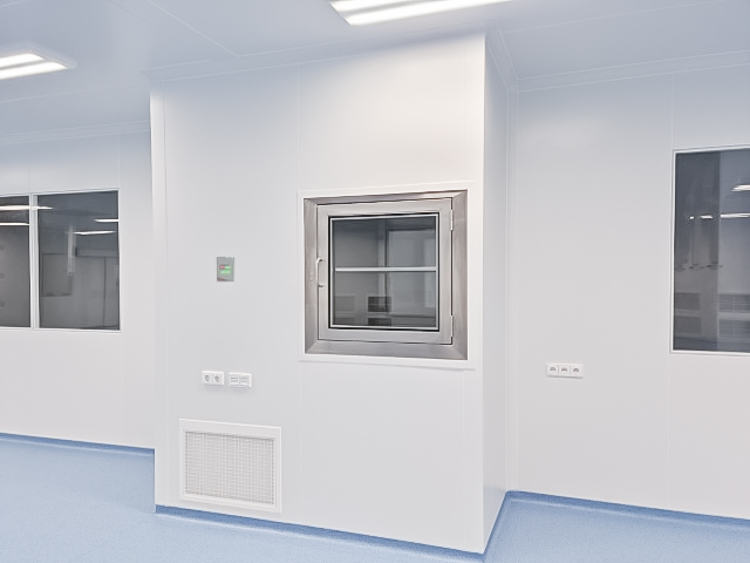
Under operational states, the ISO 7 classification allows a defined number of particles per cubic meter, depending on size thresholds. The classification applies to measured airborne particles, not surface cleanliness. These limits guide continuous airborne particle monitoring, using strategic sampling points defined within the cleanroom’s contamination control strategy (CCS). Maintaining compliance is part of a broader design-for-lifecycle principle: measurement points, access systems and flow patterns are all considered during the early design phase to simplify long-term validation and monitoring.
Air Changes Per Hour (ACH)
Air changes per hour (ACH) represent how frequently the entire cleanroom air volume is replaced through HEPA or ULPA filtered air. In ISO 7 environments, air renewal rate must balance contaminant dilution with the energy efficiency of the heating, ventilation, and air conditioning (HVAC) system. Too little airflow risks contamination build-up; excessive airflow increases turbulence and energy consumption. Through computational fluid dynamics (CFD) and lifecycle-based simulation, we define performance targets that ensure stable dilution without overdesign, supporting predictable cleanroom behaviour over time.
Pressure cascade
ISO 7 cleanrooms typically function as interface zones between cleaner (ISO 6 or ISO 5) and less clean (ISO 8) areas. A correctly established pressure hierarchy ensures that air always flows from the cleanest to the least clean zones, preventing cross-contamination during personnel passage or material transfer. Our CTO+ approach allows cleanroom modules to be configured with predefined pressure zoning logic and integrated HVAC balancing features, allowing rapid configuration while maintaining validated compliance.
Typical applications
- Medical device assembly and packaging
- Pharmaceutical formulation or secondary processing (GMP Grade C)
- Microelectronics, optics, and precision manufacturing
- Battery and material science development
Each application benefits from lifecycle-driven design and standardized configuration, guaranteeing environments that remain compliant, reproducible, and cost-efficient to maintain.
Design considerations
Design for Cleanroom Lifecycle Management
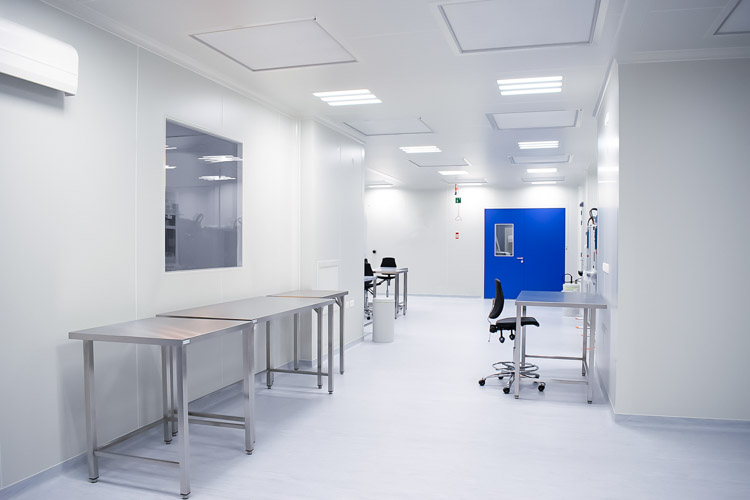
Incorrect placement of returns, excessive obstacles, or uncontrolled material flow can create localized contamination zones even when average particle counts remain acceptable. Therefore design must consider real operational behaviour rather than empty-room measurements.
At ABN Cleanroom Technology, cleanroom design extends beyond the point of installation. Through design-for-lifecycle management, we integrate predictive performance parameters, modular scalability and maintainability into every project. By combining a Configure-to-Order project approach, our cleanrooms are optimized for repeatable operation, simplified requalification, and sustainable energy use.
Final thoughts
An ISO 7 cleanroom is far more than a classification defined by particle counts. It is a dynamic, engineered system designed for operational stability, regulatory compliance, and long-term lifecycle performance. Airflow stability, pressure balance, and operational layout determine whether the classification remains compliant during use.
ABN Cleanroom Technology’s Configure-to-Order Plus methodology ensures that every ISO 7 environment is built from validated design blocks that align with cleanroom lifecycle management principles. The result: predictable behaviour, simplified validation and sustainable performance from day one through the end of the cleanroom’s operational life.