
The real cost of a cleanroom: from CAPEX to Cleanroom-as-a-Service
In the cleanroom industry, cost is often a first major question. Designing, building and maintaining a controlled environment is a complex undertaking that goes far beyond construction. To truly understand the value of a cleanroom, we must look not only at the upfront capital investment (CAPEX), but also at the long-term operational expenditures (OPEX) and the full lifecycle cost.
What determines the cost of a cleanroom?
Cleanroom cost depends on multiple interrelated factors, each influencing the final investment. The primary cost drivers include:
Cleanroom classification – Higher ISO classifications (e.g. ISO 5 vs. ISO 8) demand more stringent air cleanliness levels, requiring more filtration, airflow and energy use.
Size and layout – The total surface area, internal zoning and integration of gowning areas or airlocks determine material and installation costs.
HVAC requirements – Heating, ventilation and air conditioning systems are major cost components, as they ensure stable environmental conditions (temperature, humidity and air pressure).
Materials and finishes – Wall panels, floors and ceilings must meet specific cleanliness and durability standards. The choice of materials directly impacts cost.
Automation and monitoring – Integrating real-time control systems, sensors and data logging adds upfront investment, but lowers operational inefficiencies down the line.
Regulatory and validation requirements – Compliance with GMP, FDA, or ISO standards adds documentation and testing costs, but ensures performance reliability.
These elements form the CAPEX portion of a project, the tangible investment to get a cleanroom up and running. However, the story doesn’t end there. Recognizing these variables, ABN Cleanroom Technology has developed its Configure-to-Order+ (CTO+) approach: a methodology that standardizes critical cleanroom elements while allowing flexible configuration to specific user needs. CTO+ helps clients strike the ideal balance between speed, budget control, reliability and sustainability. By leveraging pre-engineered building blocks, projects move faster, stay within budget and maintain a consistent, validated quality level.
Cleanroom-as-a-Service vs. traditional construction cost
Traditional projects
Traditional cleanroom projects follow a rigid CAPEX model: design, build, validate and handover a fixed facility. This means a large upfront investment, usually followed by years of maintenance and upgrades that are mostly not budgeted in the initial phase.
Cleanroom-as-a-Service
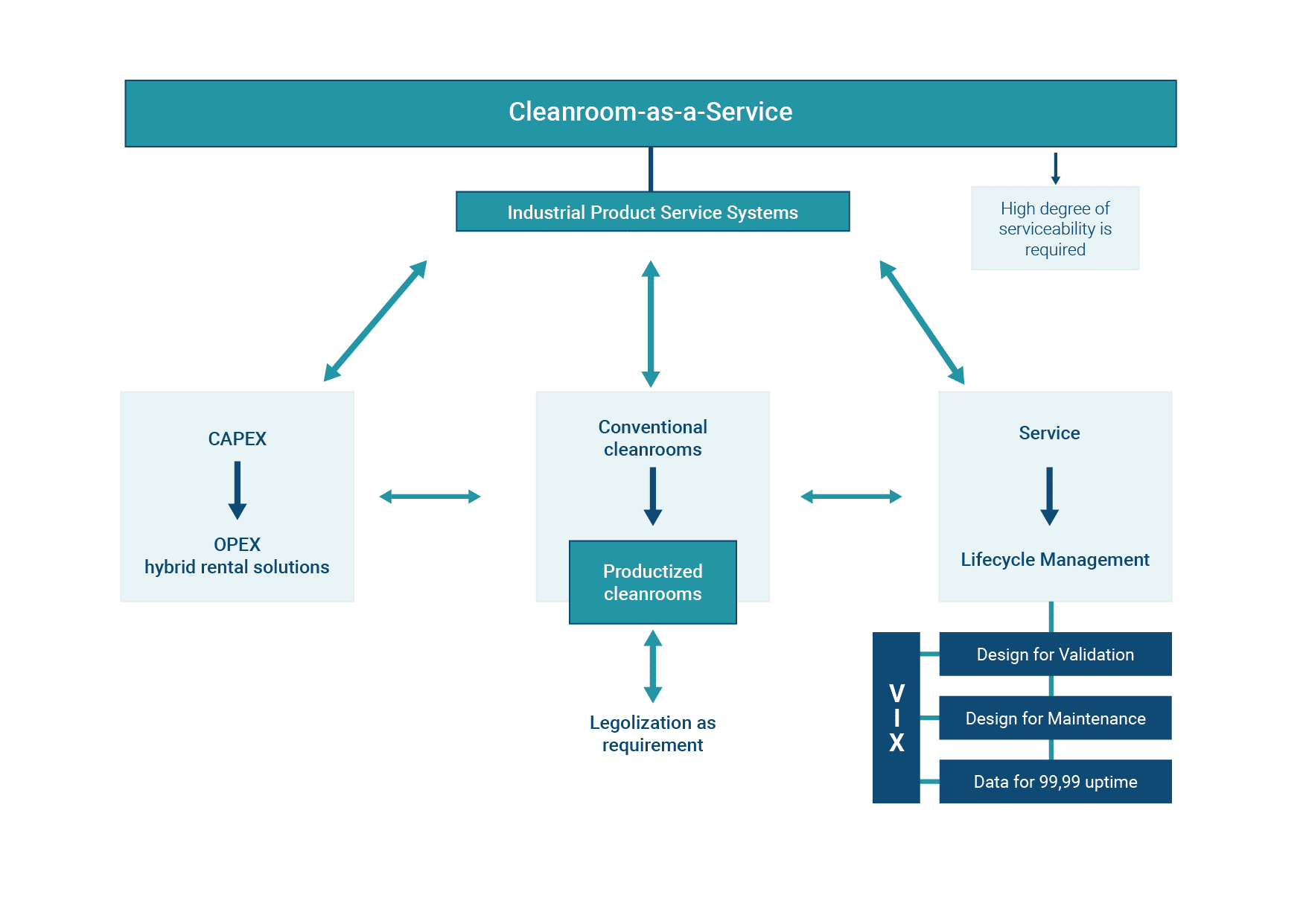
In contrast, in a CaaS model, clients pay operational fees aligned with usage, service levels and performance uptime. It covers technical systems and services including HVAC, cooling, monitoring, maintenance and service contracts.
This OPEX-based approach provides several financial and operational advantages:
- Lower entry barrier – Companies no longer need to commit millions upfront; they can access cleanroom technology early in their growth phase.
- Scalability – Facilities can expand or adapt as needs evolve, supporting research phases, production scale-ups, or product diversification.
- Service inclusion – Maintenance, upgrades, and monitoring are integrated into the model, ensuring predictable cost and consistent performance.
- Pay-for-performance – Costs are tied to results and uptime, aligning incentives for both provider and client.
In essence, CaaS transforms the cleanroom from a one-time purchase into a continuous value-added service, similar to how SaaS redefined enterprise software.
Understanding cleanroom lifecycle cost
When considering total lifecycle cost, we look beyond design and construction toward the full operational lifespan — typically 10 to 20 years. Over this period, operational expenditure often exceeds the original capital investment several times over.
Key lifecycle cost components include:
Energy consumption – HVAC systems represent up to 60% of operational costs; optimizing airflow efficiency can yield significant savings.
Maintenance and upgrades – Filter replacements, calibration and certification are recurring expenses that must be planned proactively.
Downtime and revalidation – Unexpected shutdowns or process changes can incur hidden costs linked to lost productivity.
Sustainability and circularity – Modular cleanroom concepts or reusable components help reduce replacement costs and environmental footprint over time.
By shifting focus from initial CAPEX cost to lifecycle value, clients gain a more realistic picture of their total investment. This is precisely where ABN Cleanroom Technology’s CaaS model excels. It integrates lifecycle management, predictive maintenance and modular flexibility from day one, ensuring optimal performance at a predictable cost.
The future of cleanroom investment
The transition from CAPEX-focused construction to an OPEX-driven CaaS model represents more than a financial shift; it’s a paradigm change in how cleanrooms are delivered, operated and sustained. By combining modular design, integrated lifecycle management and service-driven thinking, ABN Cleanroom Technology helps clients move from owning infrastructure to accessing innovation. On demand, with full cost transparency.
What's in it for the financial department?
Operational Flexibility
In a rapidly evolving market, flexibility is paramount. CaaS provides the agility to upgrade or change equipment without the burdensome process of selling existing assets. This ensures that your production capabilities remain adaptable to market demands.
Risk Mitigation
The volatility of technology and market dynamics poses inherent risks to asset values. Opting for an OPEX model transfers the burden of obsolescence risk to the lessor, shielding you from potential losses associated with depreciating assets.
Maintenance and Repairs
OPEX business models include maintenance and repair services as part of the agreement. This not only reduces the burden on your operational teams but also fixes costs, providing greater predictability and stability in your financial planning.
Tax Advantages
Renting payments are generally considered operational expenses, potentially offering tax advantages over the depreciation of purchased assets. This can result in lower tax liabilities and improved overall tax efficiency.
StepIn®, a strategic approach to financing cleanroom infrastructure
StepIn It offers companies a flexible and financially balanced model to accelerate cleanroom projects without compromising financial stability. Want to find our more about this financing model? > Read the full article about StepIn
StepIn offers several key advantages:
- Faster internal approvals due to reduced capital outlay
- Predictable and controlled operational costs
- Limited balance sheet exposure depending on lease type
- Comprehensive service package including maintenance and compliance validations
- Accelerated project timelines and faster time to market